
Your Cart

  • Your cart is empty!
Free shipping for orders under 10km
29% off
0 Reviews

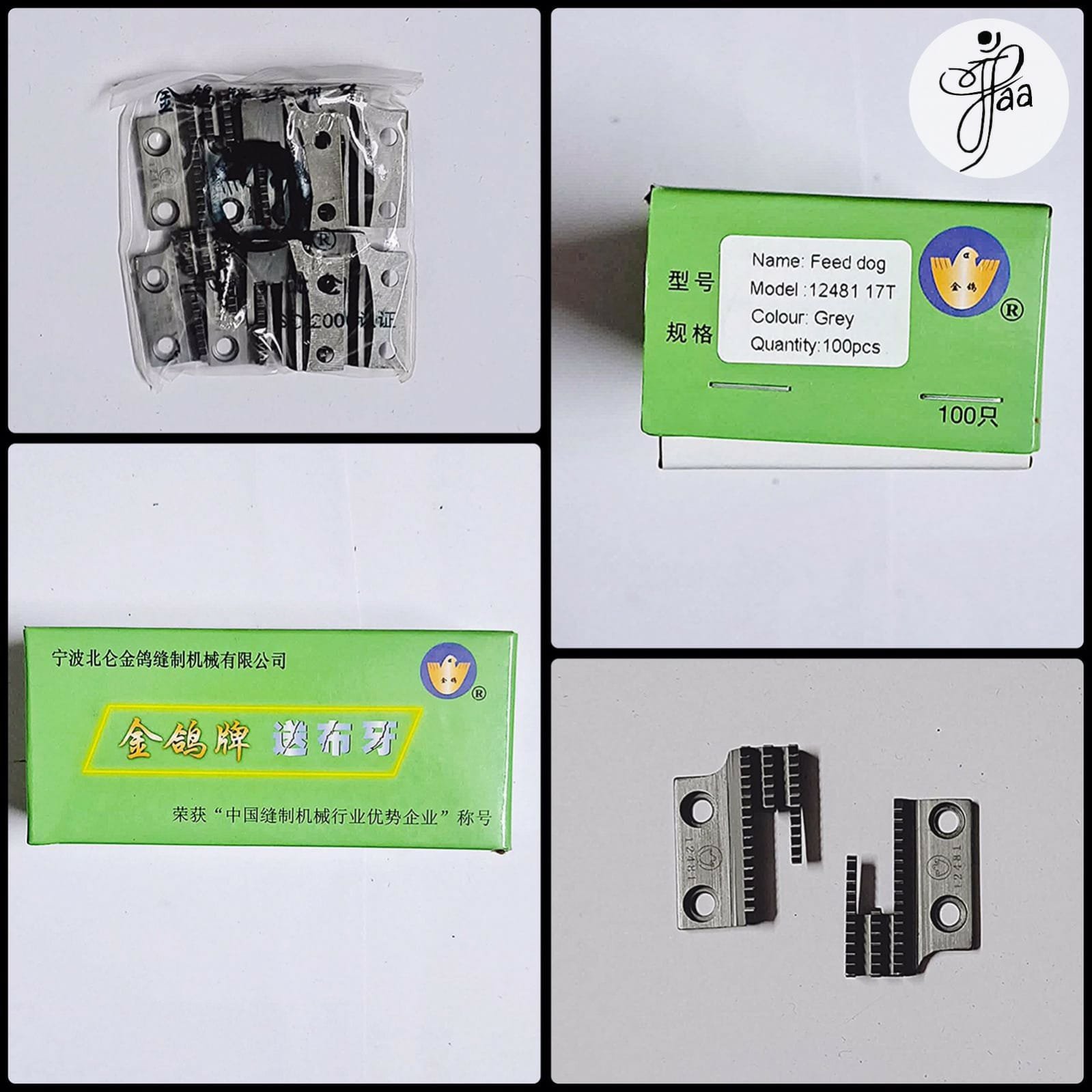
FEED DOG 17 TEETH FOR SEWING MACHINE

In stock
₹50 ₹70

\n
How feed dogs work
\n
\n
\n
  • \n
  • \n
    \n
    \n
    \n
    Movement cycle: 
    \n
    Feed dogs work in a cycle coordinated with the needle and presser foot.  \n
    \n
    \n
    \n
    \n
    \n
    • \n
    • They rise through slots in the needle plate to grip the fabric.  \n
      \n
      \n
      \n
      \n
      \n
    • The presser foot holds the fabric down against the teeth.  \n
      \n
      \n
      \n
      \n
      \n
    • The feed dogs move forward to pull the fabric a short distance.  \n
      \n
      \n
      \n
      \n
      \n
    • They then drop back down, and the presser foot's pressure allows the fabric to be held in place as the needle takes the next stitch.  \n
      \n
      \n
      \n
      \n
      \n
    \n
    \n
    \n
    \n
    \n
  • \n
    \n
    \n
    \n
    Regulating stitch length: 
    \n
    The distance the feed dogs move the fabric determines the length of each stitch. By allowing the feed dogs to move the fabric on their own, you avoid pushing or pulling, which can cause skipped stitches, needle breakage, or fabric puckering.  \n
    \n
    \n
    \n
    \n
    \n
    \n
    \n
    \n
    \n
  • \n
    \n
    \n
    \n
    Enabling different techniques: 
    \n
    In many machines, you can lower the feed dogs completely. This is essential for techniques like:  \n
    \n
    \n
    \n
    \n
    \n
    • \n
    • Free-motion quilting: By lowering the feed dogs, you can manually move the fabric in any direction, allowing for freehand design.  \n
      \n
      \n
      \n
      \n
      \n
    • Darning: This allows you to sew patches over holes or worn areas.  \n
      \n
      \n
      \n
      \n
      \n
    \n
    \n
    \n
    \n
    \n
\n
\n
\n
\n
This video shows how to lower the feed dogs for free-motion quilting:
\n
\n
\n
\n
\n
\n
\n
\n
\n
\n
\n
\n
\n
\n
\n
\n
\n
\n
\n
\n
\n
\n
40s
\n
\n
\n
\n
\n
\n
\n
\n
\n
\n
\n
\n
\n
\n
\n
\n
\n
\n
\n
\n
\n
\n
\n
\n
Hobbycraft
\n
YouTube · 29 Jun 2015
\n
\n
\n
\n
\n
\n
\n
\n
\n
\n
\n
Important considerations
\n
\n
\n
  • \n
  • \n
    \n
    \n
    \n
    Maintenance: 
    \n
    Keep the feed dogs clean, as lint and debris can hinder their ability to grip the fabric.  \n
    \n
    \n
    \n
    \n
    \n
    \n
    \n
    \n
    \n
  • \n
    \n
    \n
    \n
    Fabric handling: 
    \n
    Always let the feed dogs move the fabric. Do not push or pull it while the machine is running, as this can cause damage.  \n
    \n
    \n
    \n
    \n
    \n
    \n
    \n
    \n
    \n
  • \n
    \n
    \n
    \n
    Adjustments: 
    \n
    Some machines allow you to adjust the feed dogs' height or stitch length, which can be helpful for different fabric types. 
    \n
    \n
    \n
    \n
\n

  • 100% Original Products
    100% Original Products

  • Fast Delivery within 24-72 Hours

    Fast Delivery within 24-72 Hours

  • Cash On Delivery Available

    Cash On Delivery Available

  • 24/7 Order Support via whatsapp

    24/7 Order Support via whatsapp

Feed dogs are metal teeth on a sewing machine that grip and move fabric to create stitches. They rise, grip the fabric, pull it forward, and then drop back down to repeat the process, feeding the material consistently under the presser foot and through the machine. This motion allows for smooth, even stitches and can be lowered for techniques like free-motion quilting.  

Add your review

Your email address will not be published. Required fields are marked *

Please login to write review!

Upload photos

Looks like there are no reviews yet.

Your experience on this site will be improved by allowing cookies.